

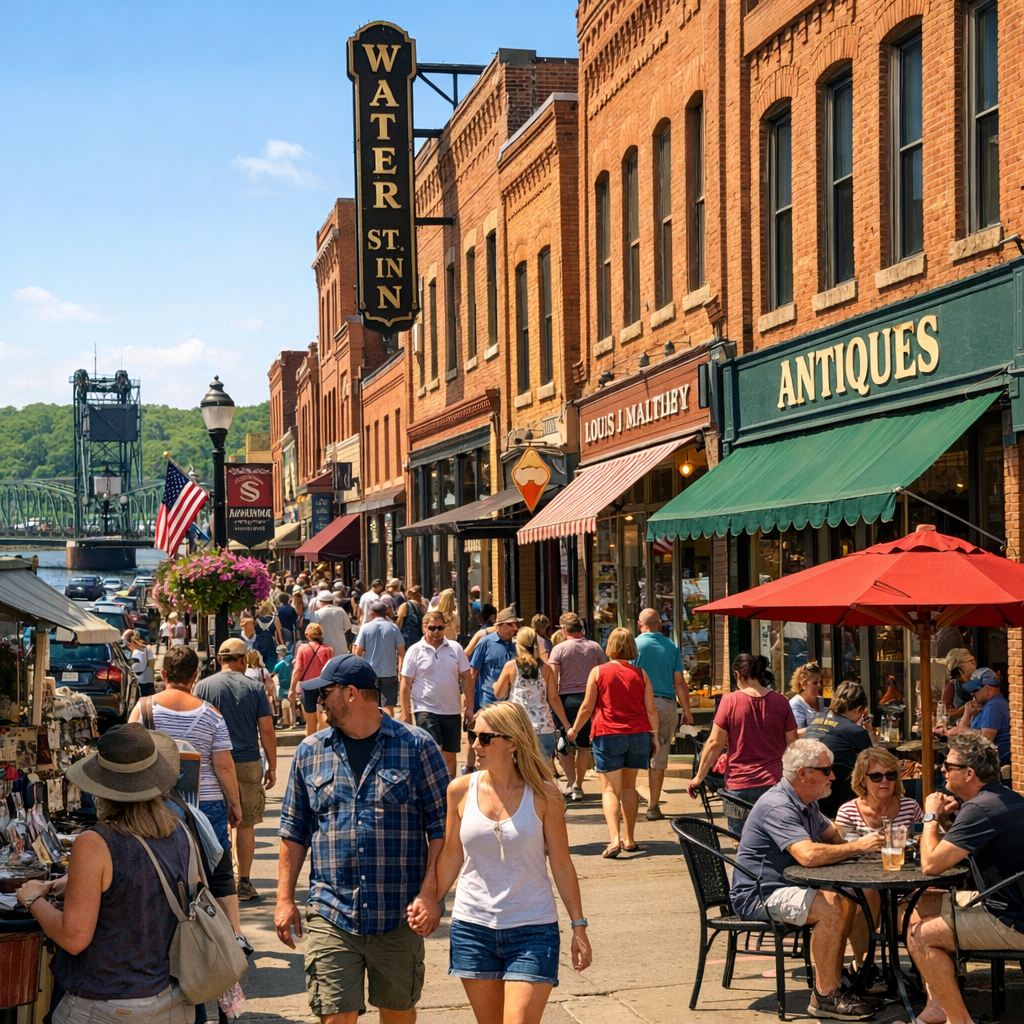
Stillwater remains a community where Main Street storefronts and locally driven ventures set the tone. With a population near 19,400 and steady growth, the city is at a crossroads economically—not so large that small-businesses are overwhelmed, yet large enough to signal significant shifts in workforce, income, and opportunity.
Local Business Landscape
Downtown Stillwater offers over 900 businesses, spanning retail shops, restaurants, professional services, and accommodation/food service. Main Street in particular is a hub for female-owned businesses: boutiques, juice bars, consultancies—many run by entrepreneurs who emphasize community ties and word-of-mouth networks. A newer development is young entrepreneurs launching businesses, such as a gourmet sandwich shop owned by a 20-year-old operator converting a former bank building—a reminder that opportunity remains accessible to those who seize it.
Workforce and Income Dynamics
Washington County, which includes Stillwater, has a labor force near 140,000 and over 96,000 workers employed across more than 7,400 businesses. Unemployment is relatively low—around 3-4 percent—pointing to a tight market for employers. Educational attainment is strong: almost half the adult population holds a bachelor’s degree or higher. Household income levels remain well above state averages, helping support local demand.
Economic Strengths and Challenges
Tourism plays a large role in Stillwater’s economy. The city’s riverfront, historic architecture, and walkable downtown draw visitors, especially during peak foliage and warm months. These visitors support restaurants, retail, and service businesses that might otherwise have leaner margins. Meanwhile, the City’s Economic Development Authority works to foster investment, assemble appropriate sites, and streamline processes for business growth.
Yet, not all is smooth sailing. The tightness of the labor market means many businesses struggle to recruit and retain employees. Washington County’s projection of industry growth for the next decade points to especially strong demand in Information Technology, Healthcare, and Accommodation & Food Services. Housing costs and commute times are making talent attraction more challenging.
Paths to Resilience
- Business collaboration: Already observed among downtown business owners, joint marketing and shared programming help spread limited resources and build regional strength.
- Support for entrepreneurs: Particularly younger founders or those outside traditional corporate routes; leveraging local financial tools, mentorships, and the EDA’s resources can bridge early-stage gaps.
- Investing in workforce pipelines: Stronger partnerships with local schools, training programs, or remote work options could help businesses fill critical roles in growing sectors.
- Balancing tourism & liveability: Maintaining the charm and walkability that draw visitors, while managing infrastructure, parking, and preservation to support year-round economic health.
- Addressing affordability: Exploring housing and transport solutions to ease cost pressures that make it harder for workers to live in or near the community they serve.
Stillwater’s future economy will likely be shaped by its ability to retain the character people value—historic neighborhoods, engaging downtowns—while adapting to changing employment patterns and regional growth pressures. If the community continues to invest in people, support local entrepreneurs, and reinforce its strengths, Stillwater could turn today’s tight spots into sustainable advantages.