

Stillwater’s housing market is showing signs of recalibration: home prices are dipping compared to last year even as rental demand and new development projects pick up steam. For anyone considering buying, renting or building, the landscape is shifting—and understanding these changes can make all the difference.
Home Prices & Sales Activity
The median price for homes in Stillwater recently dropped by about 10% year-over-year, settling near $425,000 to $460,000 depending on the data source.
Though fewer homes are changing hands compared to peak demand periods, properties are selling in around 20–37 days—faster for well-priced homes.
Inventory is still tighter than pre-pandemic norms, meaning buyers with ready financing and flexibility tend to have an edge.
Rentals Are Up—and Upward Pressure Is Building
The average rent in Stillwater now runs around $2,300 per month, an increase of roughly $150 over the past year.
Rental listings are limited, particularly in desirable areas close to downtown, so renters often need to act quickly or consider compromises on size or amenities.
Affordable and emergency rental assistance programs have also seen renewed attention from the city and nonprofits aiming to meet this rising demand.
New Developments & What’s Coming
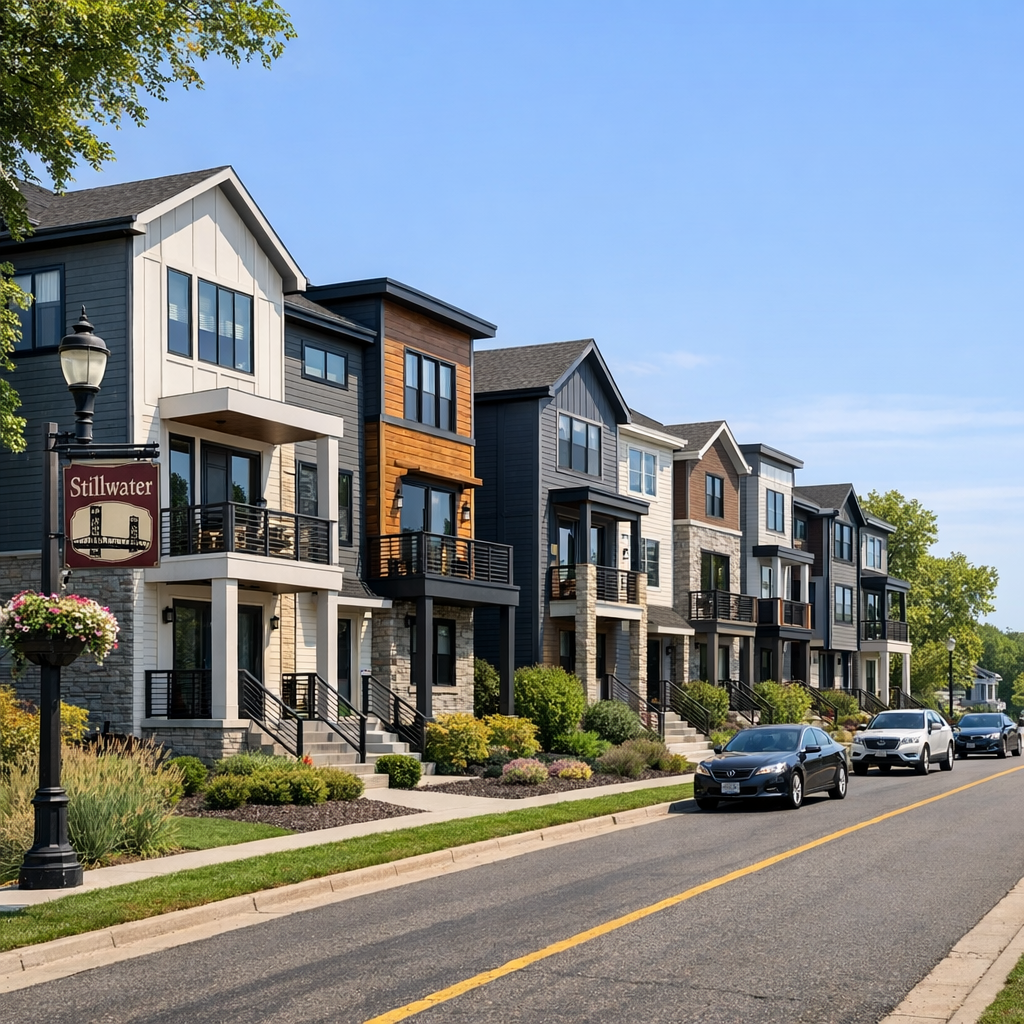
To respond to both demand and affordability concerns, Stillwater has approved several new housing projects with an emphasis on mid-density and mixed-use designs.
One of the notable recent approvals is the 106-unit “Brixton” townhome development situated southeast of Manning Avenue and 80th Street West—reduced slightly in scale to make room for community and green spaces.
The city is also building a 30-unit Emergency Housing Services Building aimed at serving residents experiencing homelessness or housing instability.
Local Voices and Preferences
According to outreach conducted as part of Stillwater’s long-range planning efforts, many residents favor “missing middle” housing types—duplexes, townhomes, small apartment buildings—over large apartment complexes.
The sentiment: more housing options that fit different incomes and life stages without altering neighborhood character.
What Buyers & Renters Should Know
- Buyers should recognize that price drops may signal opportunity, but interest rates and loan-ability remain key.
- Renters may find more movement toward shared-spaces or smaller units as demand tightens.
- Those watching development should look for projects that include walkability, access to services, and affordability components.
- Getting involved via local planning meetings can provide insight—and a chance to influence how new housing shapes Stillwater’s future.
Stillwater is in a transitional moment—homebuyers and renters both face challenges, but the city’s response with thoughtful development and supportive programs offers potential for a more balanced housing landscape.