

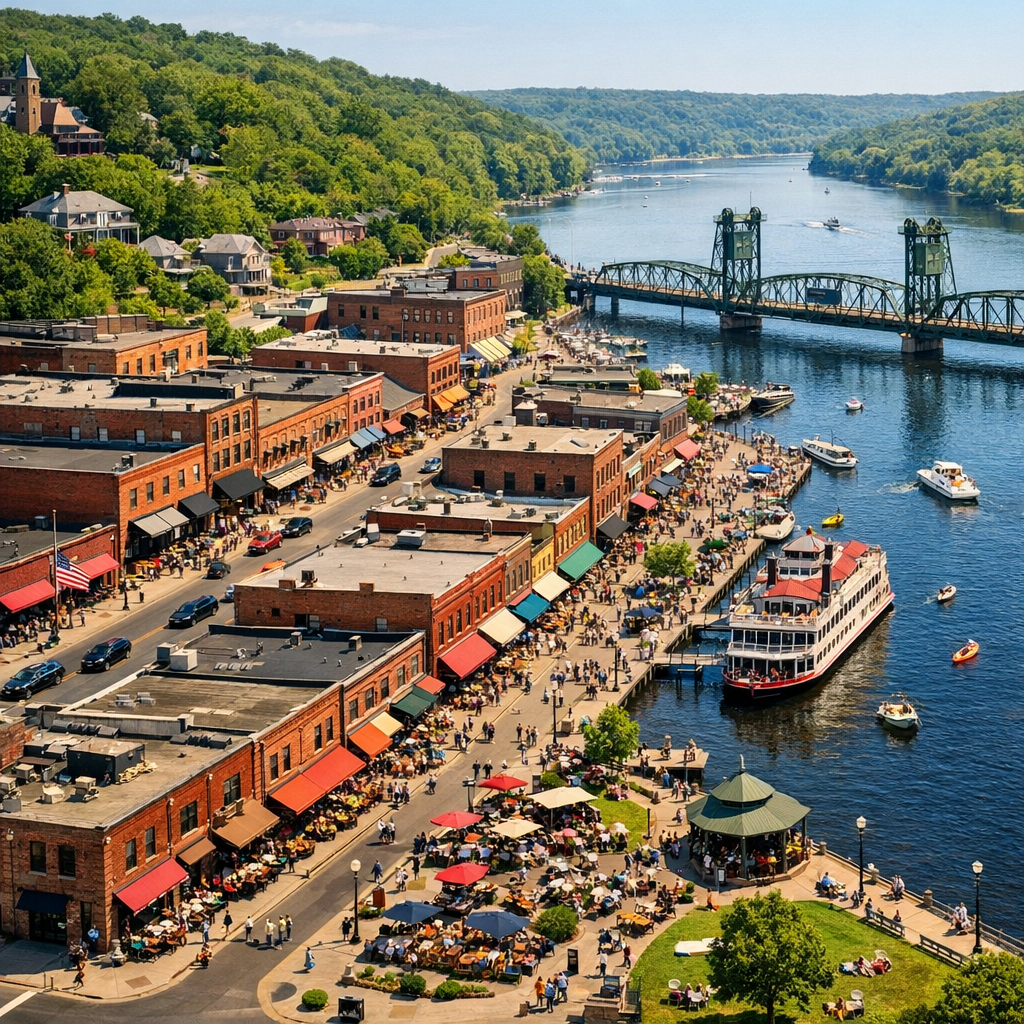
Stillwater, Minnesota, renowned for its historic charm and scenic beauty along the St. Croix River, has cultivated a dynamic economic environment that harmoniously blends tradition with modern growth. This article delves into the city’s economic landscape, highlighting key industries, development initiatives, and the community’s commitment to sustainable progress.
Economic Overview
With a population of approximately 19,354 residents, Stillwater boasts a median household income of $105,853, reflecting a stable and prosperous community. The city’s economy is characterized by a diverse mix of industries, including healthcare, retail, manufacturing, education, and a vibrant tourism sector that capitalizes on its historic downtown and picturesque riverfront.
Key Industries
Tourism and Hospitality
Tourism plays a pivotal role in Stillwater’s economy, with the sector accounting for a significant portion of local business activity. The historic downtown area, featuring 19th-century architecture, boutique shops, and a variety of dining options, attracts visitors year-round. Events along the St. Croix River further bolster this industry, providing ample opportunities for local businesses to thrive.
Healthcare
The healthcare sector in Stillwater is robust, offering a range of medical and administrative roles. This industry provides stable, high-paying career paths for residents, contributing to the overall economic health of the community.
Manufacturing and Technology
Transitioning from its historic lumber town roots, Stillwater has embraced modern manufacturing, including facilities focused on biomedical advancements and innovative consumer products. This sector’s growth reflects the city’s adaptability and commitment to economic diversification.
Community Development Initiatives
The City of Stillwater actively supports local businesses through various development initiatives. The Community Development Department oversees economic development activities, providing resources such as site selection assistance, financial programs, and planning services. In 2021, the Stillwater City Council established the Stillwater Economic Development Authority (EDA) to expand tools available for economic growth, including site assembly and public financing of development projects.
Additionally, the city partners with organizations like the Washington County Community Development Agency and the Open to Business Program to offer financial assistance and support to local enterprises. These collaborative efforts aim to foster a thriving business environment that benefits both entrepreneurs and residents.
Housing Market Trends
Stillwater’s housing market reflects the city’s economic vitality. As of June 2026, the median listing price for homes was $632,450, marking a 9.08% year-over-year increase. The median sold price stood at $476,500, with homes selling in a median of 37 days. The rental market also experienced growth, with the median rent reaching $2,575 per month, a 21.35% increase from the previous year. These trends indicate strong demand in both buying and renting markets, underscoring the city’s appeal to prospective residents and investors.
Looking Ahead
Under the leadership of Community Development Director Jason Zimmerman, appointed in early 2026, Stillwater is actively working on a Comprehensive Plan to guide the city’s development over the next two decades. This plan aims to balance growth with the preservation of the city’s historic character, ensuring that Stillwater remains a desirable place to live, work, and visit.
In conclusion, Stillwater’s economic landscape is a testament to the city’s ability to honor its rich history while embracing modern growth. Through diverse industries, proactive development initiatives, and a strong sense of community, Stillwater continues to thrive as a vibrant and prosperous city.