

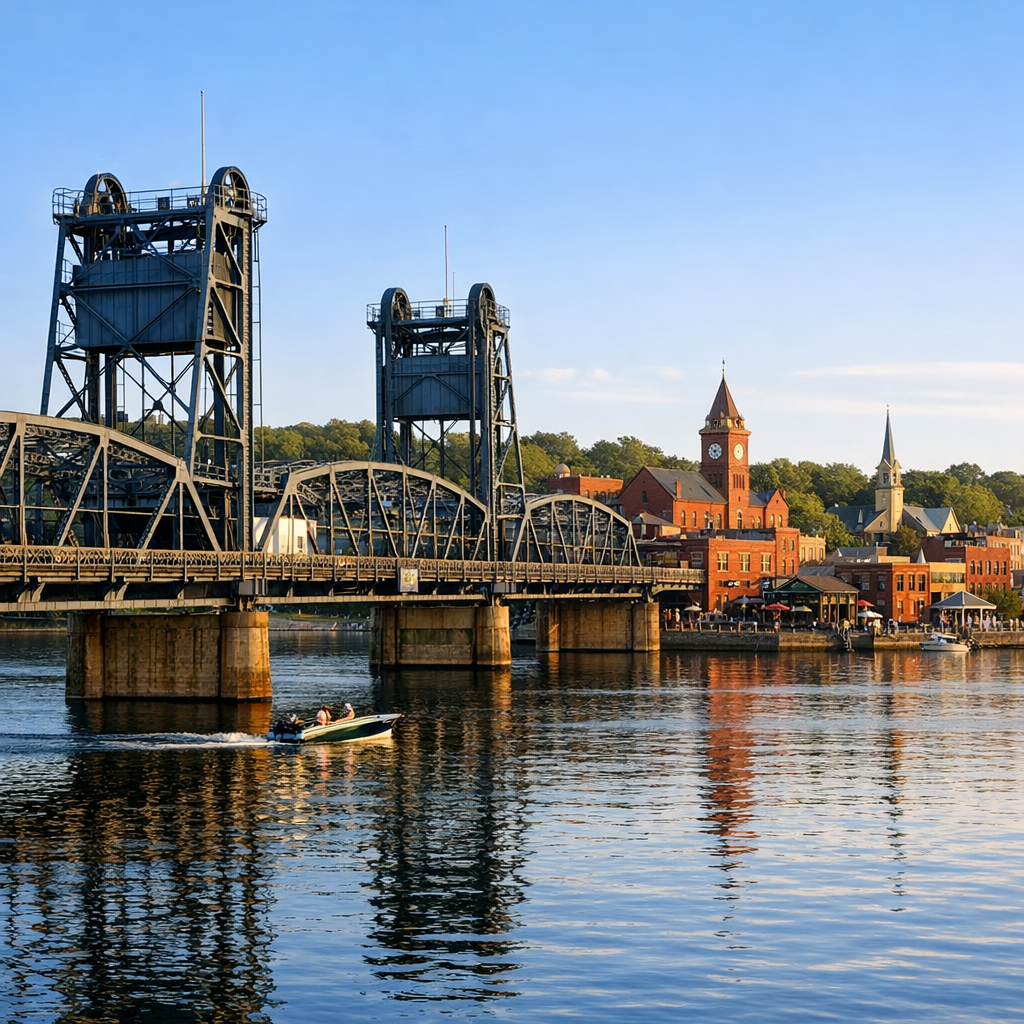
Stillwater, often referred to as the ‘Birthplace of Minnesota,’ holds a unique place in our state’s history. Established in 1843, it was among the first towns in the region, even preceding Minneapolis. The city’s strategic location along the St. Croix River and its abundant white pine forests propelled it to become the world’s largest lumber producer in the 1880s. This lumber boom not only shaped our local economy but also left a lasting imprint on our community’s identity.
One of the most iconic landmarks from this era is the Stillwater Historic Lift Bridge. Constructed in 1931, this vertical-lift bridge stands as a testament to our engineering heritage and continues to be a focal point for both residents and visitors. Its preservation underscores our community’s commitment to honoring our past while embracing the future.
Beyond its industrial achievements, Stillwater has been a hub for cultural and social development. The establishment of the Minnesota Territorial Prison in 1853 marked a significant chapter in our state’s penal history. Additionally, the city’s role in the 1848 territorial convention was pivotal in Minnesota’s journey to statehood, highlighting Stillwater’s influence in shaping our state’s governance.
Today, our community continues to celebrate and preserve this rich heritage. Events like the Washington County Fair and the Summer Tuesdays series at North Lowell Park offer residents and visitors alike opportunities to engage with our history through music, markets, and communal gatherings. These events not only provide entertainment but also foster a sense of unity and pride in our shared past.
As we navigate the challenges and opportunities of the present, it’s essential to reflect on our roots. Understanding and appreciating Stillwater’s history allows us to build a future that honors our legacy while embracing innovation and growth. Let’s continue to cherish and share our stories, ensuring that the spirit of Stillwater endures for generations to come.