

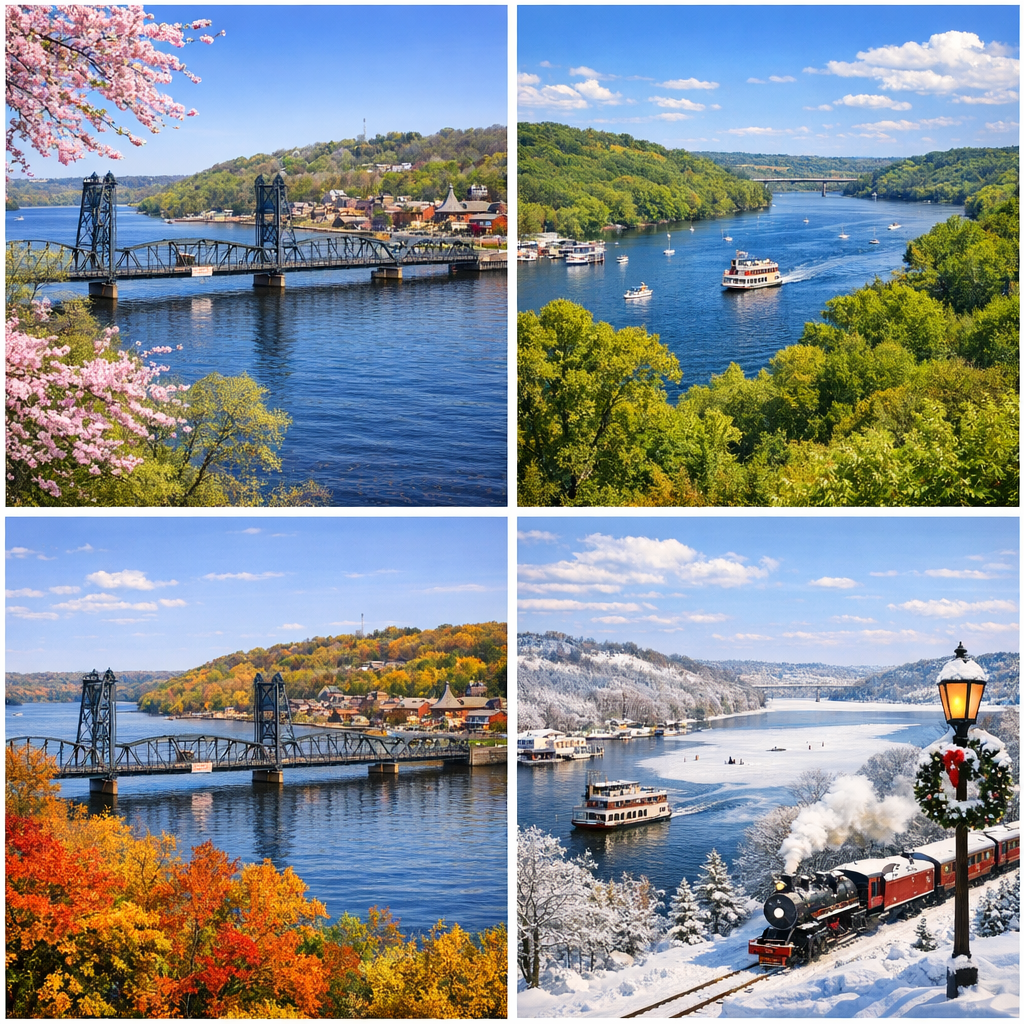
Stillwater, Minnesota, experiences a Humid Continental climate characterized by warm, wet summers and cold, snowy winters. Average annual temperatures range from a low of 36.5°F to a high of 55.3°F, with annual precipitation averaging 34.5 inches. The growing season typically spans from late April to early October, providing approximately 150-180 frost-free days each year.
Seasonal Climate Overview
Winter
Winters in Stillwater are cold and snowy, with average low temperatures around 6.9°F in January. Snowfall is common, contributing to the region’s winter landscape.
Spring
Spring brings a gradual warming, with average high temperatures reaching 56.2°F in April. This season also sees increased precipitation, averaging 3.18 inches, supporting the blooming of local flora.
Summer
Summers are warm and wet, with July being the hottest month, averaging a high of 82.7°F. Precipitation peaks in June, averaging 5.05 inches, often resulting in lush greenery.
Autumn
Autumn features cooler temperatures and reduced rainfall, with October averaging a high of 58.7°F and 3.06 inches of precipitation. The season is marked by vibrant fall foliage.
Environmental Initiatives in Stillwater
Stillwater is actively engaged in several environmental initiatives aimed at promoting sustainability and conservation.
Sustainable Stillwater MN
Established in 2016, Sustainable Stillwater MN is a nonprofit organization dedicated to making the community more resilient and sustainable. Their efforts include achieving Minnesota GreenStep City recognition, supporting Safe Routes to School, and launching the Green Business Directory. In 2024, they collaborated with the City of Stillwater to adopt an Energy Action Plan focused on reducing energy consumption and greenhouse gas emissions.
Bird City Program
In partnership with the City of Stillwater, the Bird City Program aims to protect bird populations and their habitats through education, habitat stewardship, and community collaboration. This initiative aligns with the Minnesota Audubon Society’s best practices and contributes to the city’s sustainability goals.
Environmental Learning Center
Located behind Stillwater Area High School, the Environmental Learning Center (ELC) is a 55-acre area managed to reflect Minnesota’s major biomes, including oak forest, prairie, and coniferous planting. The ELC serves as an outdoor classroom where students engage in activities like bird banding, small mammal trapping, and wildlife observation, fostering a connection with the local environment.
Energy Action Plan
Adopted in 2024, Stillwater’s Energy Action Plan aims to educate and inspire residents and businesses to engage in energy-saving practices. The plan sets a community-wide goal to save 3.8 million kWh of electricity and 198,000 therms of natural gas by the end of 2025, which would avoid an additional 58% of energy-related greenhouse gas emissions and save the community $450,000.
Conclusion
Understanding Stillwater’s climate patterns is essential for residents and visitors alike. The city’s commitment to environmental initiatives demonstrates a proactive approach to sustainability, ensuring that Stillwater remains a vibrant and resilient community for future generations.