

Stillwater, Minnesota, experiences a Humid Continental climate, characterized by warm, wet summers and cold, snowy winters. Average annual temperatures range from a low of 36.5°F to a high of 55.3°F, with annual precipitation averaging 34.5 inches. The growing season typically spans from late April to early October, providing approximately 150-180 frost-free days each year.
Seasonal Climate Overview
Spring
Spring in Stillwater brings a gradual warming trend, with average high temperatures rising from 41.3°F in March to 68.5°F in May. This season also sees an increase in precipitation, averaging 1.62 inches in March and peaking at 4.21 inches in May.
Summer
Summers are warm and wet, with average high temperatures reaching 82.7°F in July. June typically experiences the highest precipitation, averaging 5.05 inches, contributing to the lush greenery of the region.
Autumn
Autumn brings cooler temperatures and reduced rainfall. Average highs decrease from 72.8°F in September to 42.8°F in November, with precipitation averaging around 3.53 inches in September.
Winter
Winters are cold and snowy, with average low temperatures dropping to 6.9°F in January. Precipitation is lower during this season, averaging 0.93 inches in January.
Environmental Initiatives in Stillwater
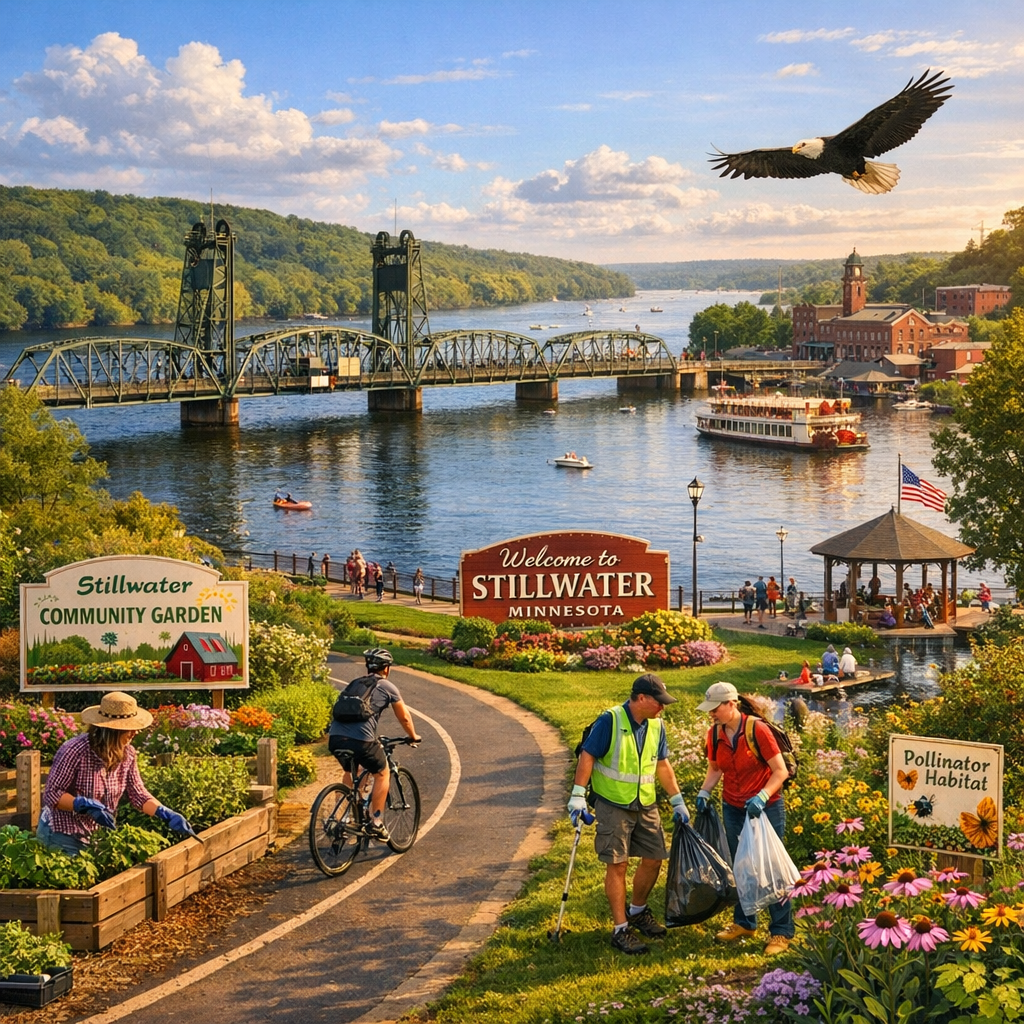
Stillwater is actively engaged in several environmental initiatives aimed at promoting sustainability and protecting natural resources.
Sustainable Stillwater MN
Established in 2016, Sustainable Stillwater MN is a nonprofit organization dedicated to promoting sustainability across the community. The organization focuses on three key pillars: Environment, Economy, and Community. Their efforts include achieving Minnesota GreenStep City recognition, supporting Safe Routes to School, launching the Green Business Directory, and collaborating with the City of Stillwater on the Energy Action Plan adopted in 2024.
Bird City Program
The Bird City Program advances Stillwater’s commitment to protecting birds and their habitats through education, habitat stewardship, and community collaboration. Guided by best practices established by the Minnesota Audubon Society, the program focuses on engaging residents in bird conservation, restoring and enhancing habitats, and reducing human-caused threats to birds.
Energy Action Plan
Stillwater’s Energy Action Plan aims to educate and inspire residents and businesses to engage in energy-saving actions. The plan sets a community-wide goal to save 3.8 million kWh of electricity and 198,000 therms of natural gas by the end of 2025, which would avoid an additional 58% of energy-related greenhouse gas emissions and save the community $450,000.
PFAS Mitigation Efforts
The City of Stillwater is proactively addressing the presence of per- and polyfluoroalkyl substances (PFAS) in drinking water. Construction is underway for a new PFAS treatment facility at Well #10, with the project expected to be substantially complete by May 1, 2026. This initiative demonstrates the city’s commitment to providing safe, high-quality drinking water for its residents.
Understanding Stillwater’s climate patterns and participating in local environmental initiatives can help residents and visitors alike contribute to the community’s sustainability and resilience.