

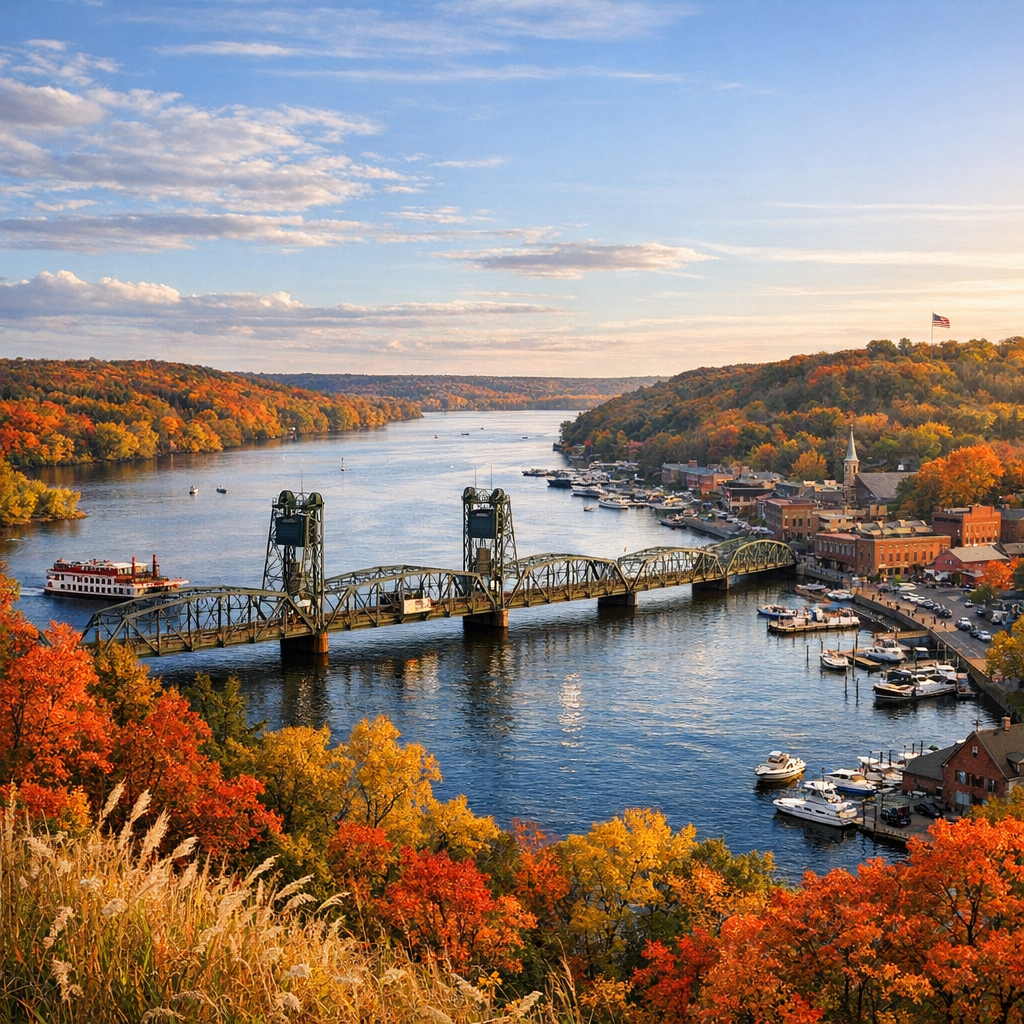
Stillwater, Minnesota, experiences a humid continental climate characterized by distinct seasonal variations. Summers are typically warm and wet, while winters are cold and snowy. The average annual high temperature is approximately 55.3°F, with lows averaging around 36.5°F. Precipitation averages 34.5 inches annually, contributing to the region’s lush landscapes.
Seasonal Climate Overview
Spring
Spring in Stillwater brings gradual warming, with average high temperatures rising from 41.3°F in March to 68.5°F in May. This season also sees increased precipitation, averaging 3.18 inches in April and 4.21 inches in May, supporting the blooming flora.
Summer
Summers are warm, with July being the hottest month, averaging a high of 82.7°F. Precipitation remains significant, averaging 4.37 inches in July, often resulting in humid conditions.
Autumn
Autumn features cooling temperatures, with average highs decreasing from 72.8°F in September to 42.8°F in November. Precipitation averages 3.53 inches in September, tapering off as winter approaches.
Winter
Winters are cold and snowy, with January being the coldest month, averaging a low of 6.9°F. Precipitation is lower, averaging 0.93 inches in January, primarily as snowfall.
Environmental Initiatives
Recognizing the importance of environmental stewardship, Stillwater has implemented several initiatives:
Energy Action Plan
In 2024, Stillwater adopted an Energy Action Plan aiming to save 3.8 million kWh of electricity and 198,000 therms of natural gas by the end of 2025. This plan focuses on educating residents and businesses about energy conservation to reduce emissions and enhance energy resilience.
Bird City Program
Stillwater participates in the Bird City Program, dedicated to protecting bird populations and their habitats. This initiative involves community education, habitat restoration, and reducing threats to birds, reflecting the city’s commitment to biodiversity.
PFAS Mitigation Efforts
The city is proactively addressing per- and polyfluoroalkyl substances (PFAS) contamination in drinking water. Construction of a new PFAS treatment facility at Well #10 is underway, with completion expected by May 2026. This facility aims to ensure safe drinking water for residents.
Community Engagement
Residents are encouraged to participate in environmental programs, such as the Naturalist-in-Residence series at the Stillwater Public Library. These programs offer educational opportunities on local ecology and conservation efforts.
Understanding Stillwater’s climate patterns and engaging in local environmental initiatives are vital steps toward fostering a sustainable and resilient community.