

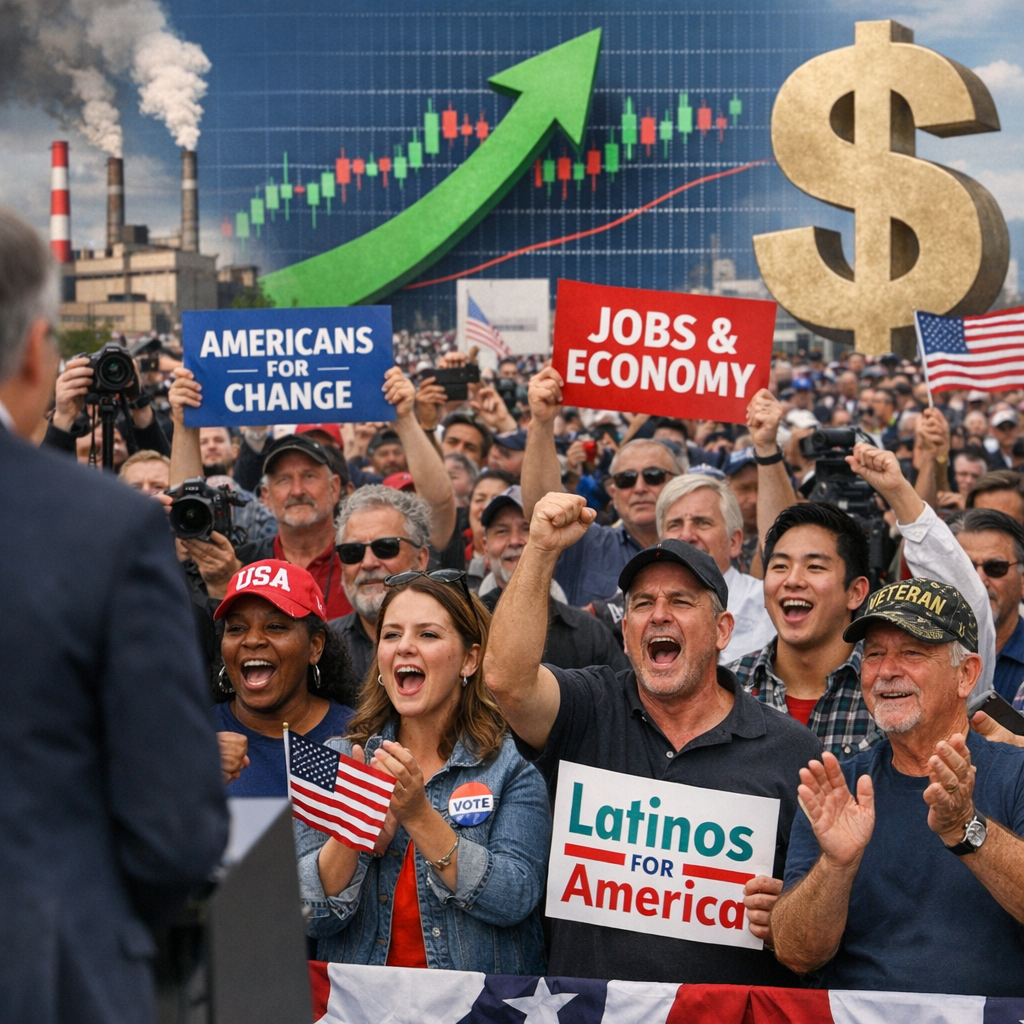
The United States is currently experiencing significant shifts in both its political and economic spheres, with developments that have far-reaching implications for citizens nationwide.
Political Dynamics
As the midterm elections approach, both major political parties are grappling with internal challenges. The Republican Party, under President Trump’s leadership, faces internal divisions due to efforts to reshape its structure by replacing moderates with more aligned candidates. This strategy has raised concerns about the electability of some endorsed candidates. Simultaneously, the Democratic Party is dealing with ideological tensions between its moderate and progressive factions, leading to controversies in key races. These internal struggles have resulted in a climate of uncertainty and upheaval within both parties.
Economic Overview
The U.S. economy has shown resilience amidst various challenges. In the first quarter of 2026, the economy grew at an annualized rate of 2%, rebounding from a sluggish 0.5% increase in the previous quarter, which was significantly affected by a government shutdown. This growth was bolstered by recovering conditions post-shutdown and robust investments in artificial intelligence (AI), indicating the sector’s enduring strength. However, inflation surged in March, attributed to an energy shock stemming from the onset of the Iran war, raising concerns among Federal Reserve officials. Despite these inflationary pressures, broader economic indicators have demonstrated resilience, underscoring the economy’s strong performance during this challenging period.
Understanding these political and economic trends is crucial for citizens to navigate the evolving landscape effectively. Staying informed enables individuals to make decisions that align with their interests and contribute to the nation’s collective progress.