

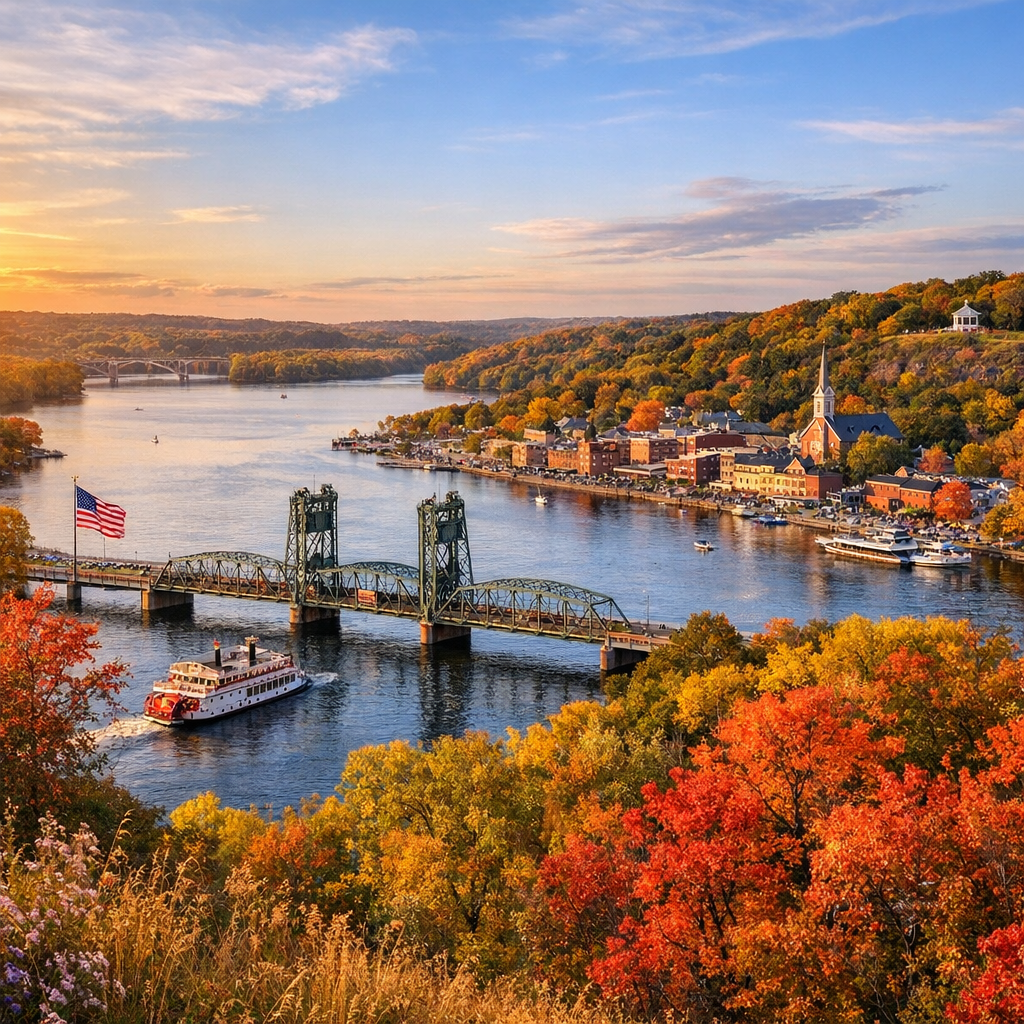
Stillwater, Minnesota, experiences a Humid Continental Mild Summer climate, characterized by warm, wet summers and cold, snowy winters. Average annual temperatures range from a low of 36.5°F to a high of 55.3°F, with annual precipitation averaging 34.5 inches. The growing season typically spans from late April to early October, providing approximately 150-180 frost-free days each year.
Seasonal Climate Overview
Spring
Spring in Stillwater brings a gradual warming trend, with average high temperatures rising from 41.3°F in March to 68.5°F in May. This season also sees an increase in precipitation, averaging 1.62 inches in March and peaking at 4.21 inches in May.
Summer
Summers are warm and wet, with average high temperatures reaching 82.7°F in July. June typically experiences the highest precipitation, averaging 5.05 inches, contributing to the lush greenery of the region.
Fall
Fall brings cooler temperatures and decreasing precipitation. Average highs drop from 72.8°F in September to 42.8°F in November, while precipitation decreases from 3.53 inches to 1.73 inches over the same period.
Winter
Winters are cold and snowy, with average low temperatures reaching 6.9°F in January. Snowfall is common, contributing to the region’s winter landscape.
Environmental Initiatives in Stillwater
Stillwater is actively engaged in several environmental initiatives aimed at promoting sustainability and protecting natural resources.
Energy Action Plan
The city’s Energy Action Plan focuses on educating and inspiring residents and businesses to engage in energy-saving practices. The goal is to save 3.8 million kWh of electricity and 198,000 therms of natural gas by the end of 2025, which would avoid an additional 58% of energy-related greenhouse gas emissions and save the community $450,000.
Bird City Program
In collaboration with Sustainable Stillwater MN, the Bird City Program aims to protect bird populations and their habitats through education, habitat stewardship, and community collaboration. This initiative reflects the community’s commitment to biodiversity and environmental health.
PFAS Investigation Efforts
The Minnesota Pollution Control Agency (MPCA) is actively investigating potential PFAS sources in Stillwater. This includes sampling private wells to determine the source of PFAS contamination and ensure safe drinking water for residents.
Environmental Learning Center
Located behind Stillwater Area High School, the Environmental Learning Center is a 55-acre area managed to reflect Minnesota’s major biomes, including oak forest, prairie, and coniferous planting. It serves as an educational resource for students and the community, promoting environmental awareness and stewardship.
Through these initiatives and a deep understanding of its climate, Stillwater continues to foster a sustainable and environmentally conscious community.