

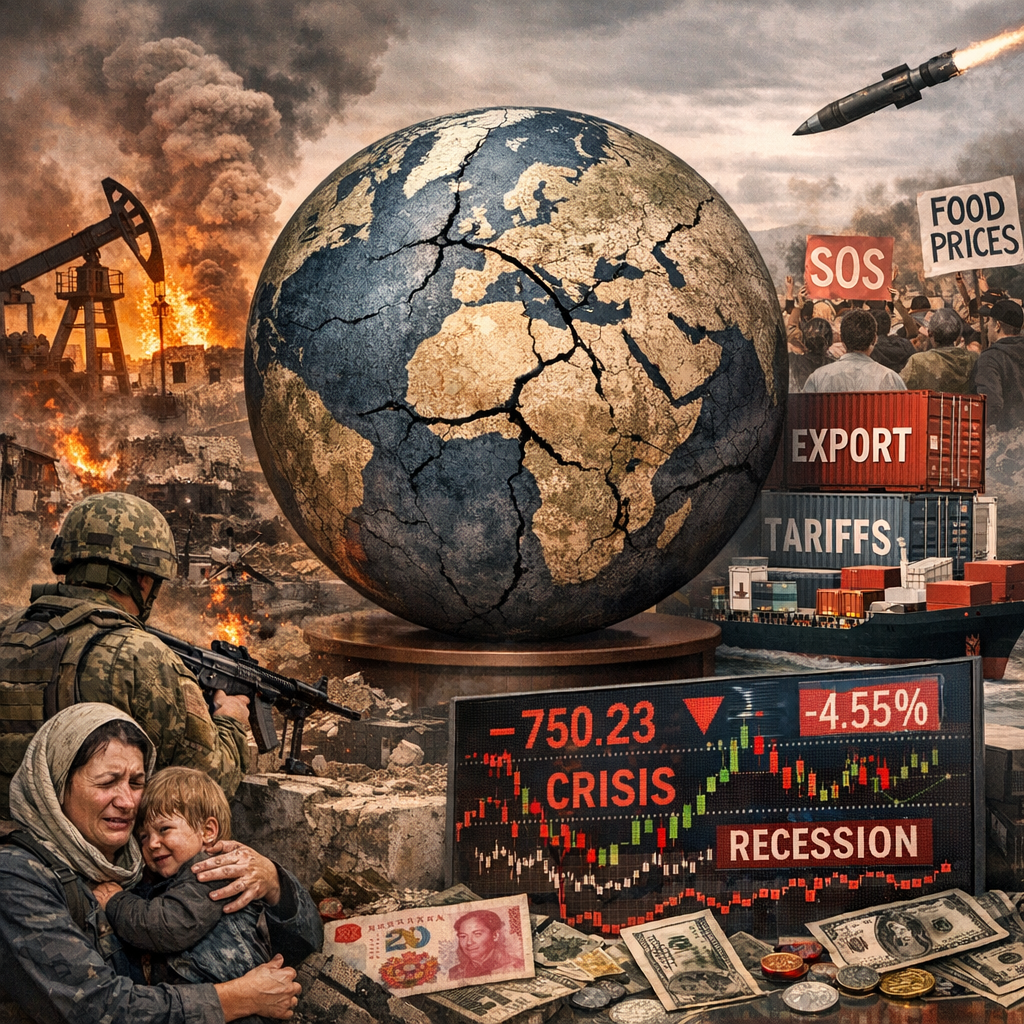
In recent years, the world has entered what experts term the ‘Era of Polycrisis,’ characterized by multiple, simultaneous global crises that are interconnected, amplifying their severity and complexity. This period is marked by the collapse of the post-Cold War international order and the emergence of high-intensity regional conflicts.
Defining the Era of Polycrisis
The ‘Era of Polycrisis’ refers to a time when distinct global crises occur simultaneously, interacting in ways that exacerbate their individual impacts. This era is distinguished by the marginalization of international law, the rise of decapitation strikes as a standard military doctrine, and the fracture of the global economy into competing geopolitical blocs.
Key Characteristics
1. Regional Conflicts
High-intensity regional wars have become more prevalent, challenging the stability of various regions and contributing to global insecurity.
2. Economic Fragmentation
The global economy is increasingly divided into competing geopolitical blocs, leading to trade tensions and economic instability.
3. Erosion of International Law
The marginalization of international law has resulted in a lack of accountability and the proliferation of unilateral actions by states.
Implications for the Future
The Era of Polycrisis presents significant challenges for global governance, economic stability, and peace. Understanding these interconnected crises is crucial for developing strategies to navigate and mitigate their impacts.