

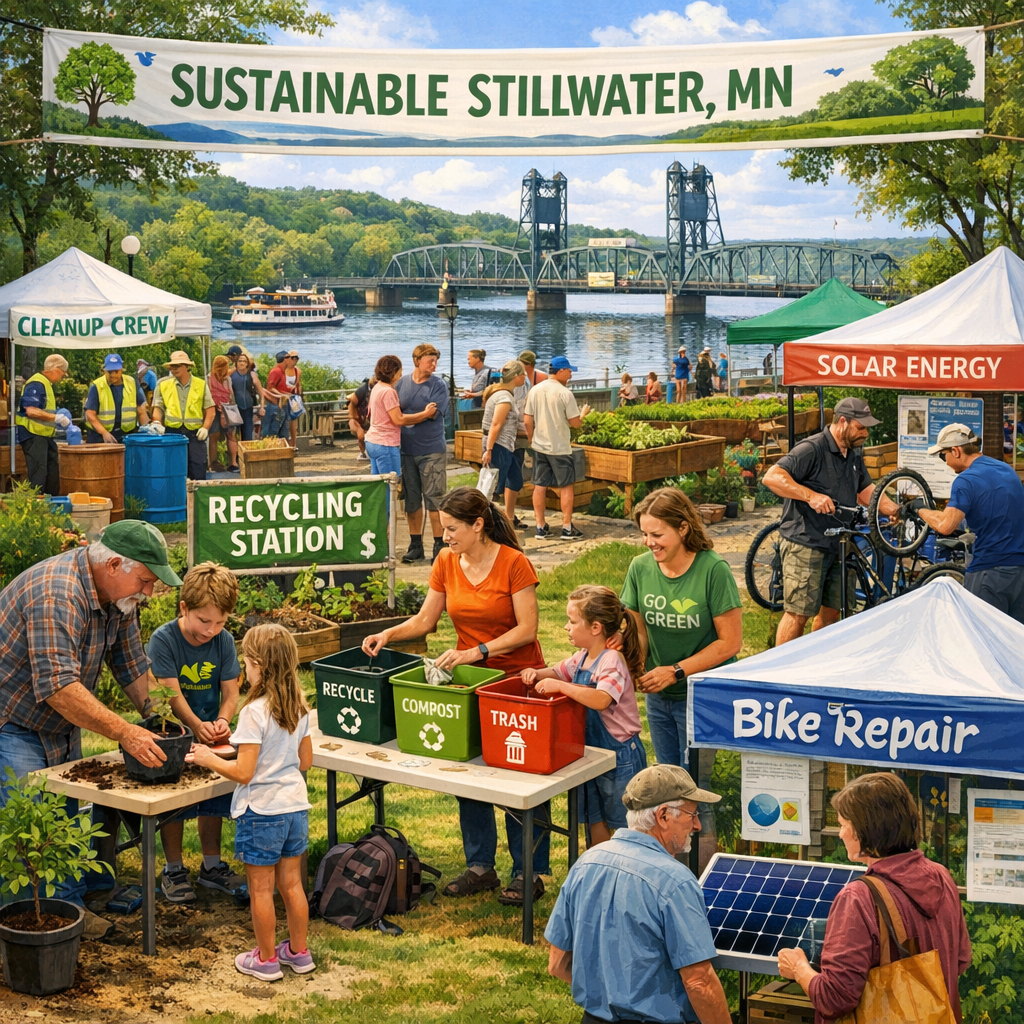
Stillwater, Minnesota, is actively pursuing sustainability through various community-driven environmental initiatives. These efforts aim to preserve the city’s natural beauty and promote a healthier environment for all residents.
Energy Action Plan
The city’s Energy Action Plan focuses on educating and inspiring residents and businesses to engage in energy-saving practices. The goal is to save 3.8 million kWh of electricity and 198,000 therms of natural gas by the end of 2025, reducing greenhouse gas emissions and saving the community approximately $450,000. Strategies include promoting energy efficiency and embracing renewable energy sources.
Environmental Learning Center
Located behind Stillwater Area High School, the Environmental Learning Center (ELC) is a 55-acre area managed to reflect Minnesota’s major biomes: oak forest, prairie, and coniferous planting. The ELC serves as an outdoor classroom where students engage in activities like banding migratory birds and studying local wildlife. Public hiking is encouraged, though dogs are not allowed to maintain the area’s ecological integrity.
Sustainable Stillwater MN
Since its inception in 2013, Sustainable Stillwater MN has been a driving force in promoting sustainability within the community. The organization has spearheaded initiatives such as the Green Business Directory and the Safe Routes to School program. In 2019, it became a registered 501(c)(3) nonprofit, further solidifying its commitment to environmental stewardship.
Bird City Program
In collaboration with the City of Stillwater, Sustainable Stillwater MN leads the Bird City Program, which focuses on protecting birds and their habitats. The program emphasizes education, habitat stewardship, and community collaboration, aligning with the Minnesota Audubon Society’s best practices. Efforts include restoring habitats and reducing human-caused threats to birds, reflecting the understanding that healthy bird populations indicate a healthy environment.
Natural Resources Management
Managing natural resources is a key aspect of Stillwater’s sustainability efforts. Residents are encouraged to adopt seasonal best practices, such as minimizing salt use for deicing in winter and clearing road gutters of debris in spring to prevent pollution of water resources. These community-driven actions contribute to the overall health of the local ecosystem.
Through these initiatives, Stillwater demonstrates a strong commitment to environmental sustainability, fostering a community that values and actively participates in preserving its natural surroundings.