

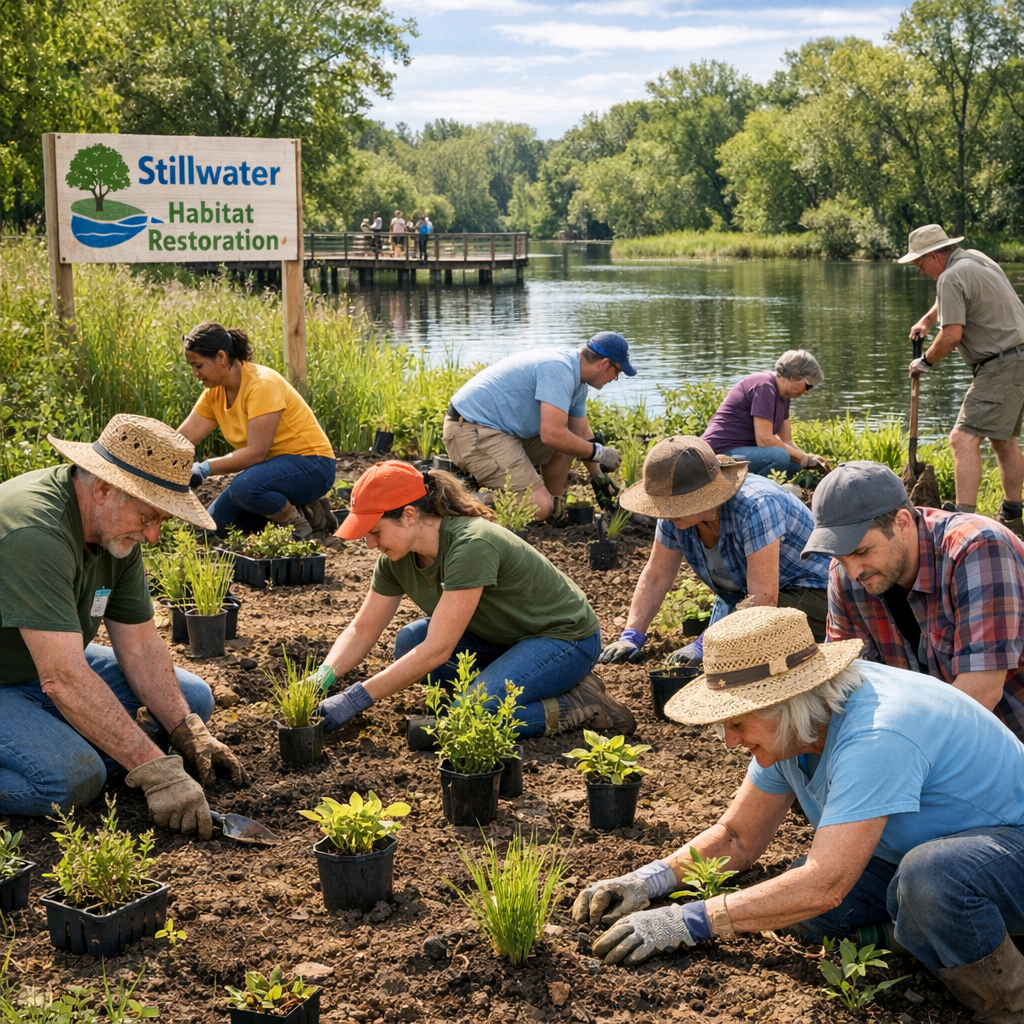
Stillwater, Minnesota, is actively engaging in environmental initiatives to enhance the community’s resilience against climate change. These efforts encompass water quality monitoring, habitat restoration, and climate action planning.
Water Quality Monitoring and PFAS Investigation
The Minnesota Pollution Control Agency (MPCA) has been investigating potential sources of per- and polyfluoroalkyl substances (PFAS) in Stillwater. This includes sampling private wells to identify contamination sources and ensure safe drinking water for residents. The MPCA’s work aims to determine the origin of PFAS in the area and provide necessary treatment for affected private wells.
Habitat Restoration and Conservation Efforts
Local organizations are leading habitat restoration projects to support biodiversity. Sustainable Stillwater MN’s Bird City Program focuses on protecting bird habitats and promoting biodiversity through education and community collaboration. Additionally, the Natural Resources Workgroup encourages seasonal practices such as minimal use of deicing salts in winter, clearing road gutters in spring, and maintaining rain gardens in summer to preserve local ecosystems.
Climate Action Planning
The Climate Action Workgroup advocates for comprehensive policies to reduce greenhouse gas emissions and adapt to climate change. This includes developing Climate Action Plans that document existing emissions, set reduction targets, and prioritize actions to mitigate climate impacts.
Community Engagement and Education
Community involvement is crucial in these environmental efforts. Residents are encouraged to participate in initiatives like the Adopt-A-Raingarden program, attend educational events such as the “What’s That Plant?” series, and engage in habitat restoration projects. These activities foster a sense of stewardship and collective responsibility for Stillwater’s natural resources.
Through these proactive measures, Stillwater is demonstrating a commitment to environmental resilience and sustainability, ensuring a healthier and more sustainable future for the community.