

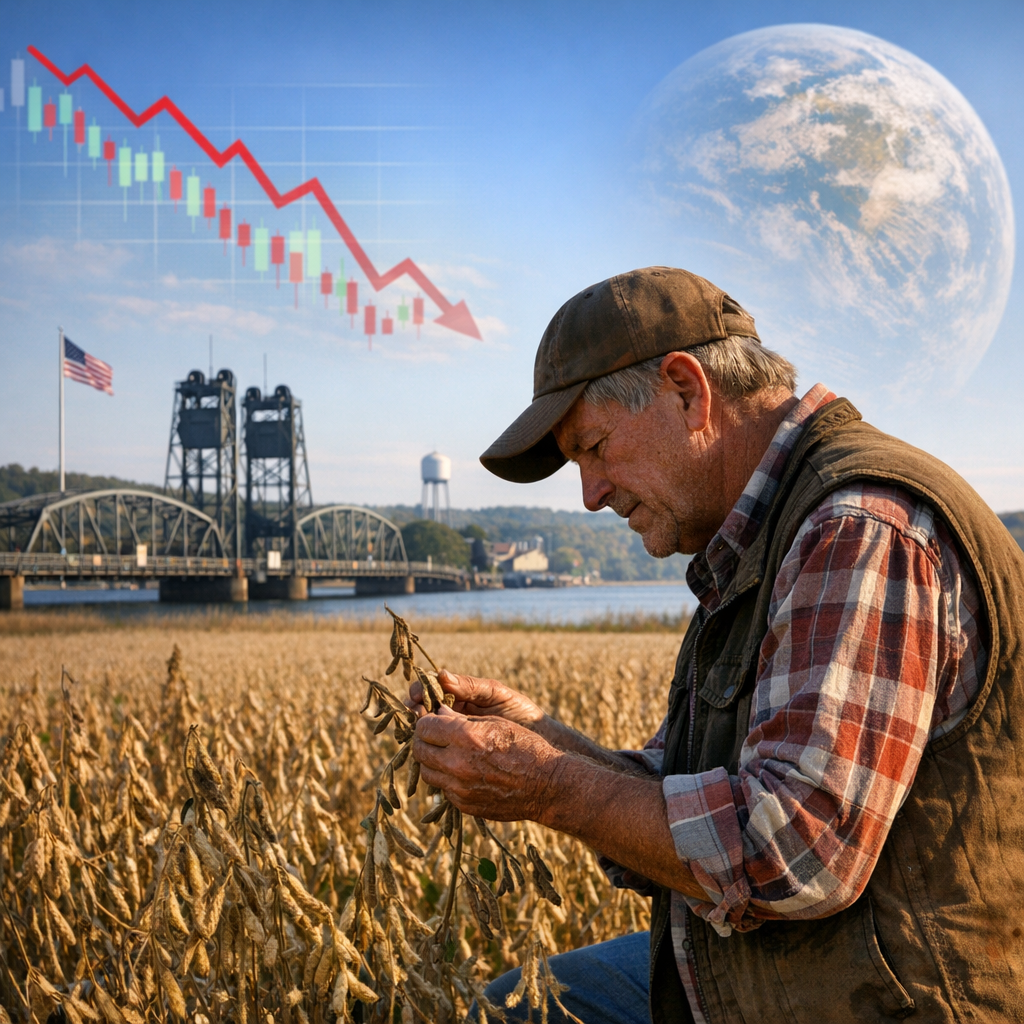
As residents of Stillwater, Minnesota, it’s essential to stay informed about global developments that can influence our local economy and way of life. Recent reports highlight significant trends in the global economy and climate that may have direct and indirect effects on our community.
Global Economic Outlook
The global economy is exhibiting resilience amid various challenges. The World Bank’s latest report projects global growth to remain steady over the next two years, easing to 2.6% in 2026 before rising to 2.7% in 2027. This stability is attributed to better-than-expected growth in major economies, particularly the United States, which accounts for a significant portion of the upward revision in the forecast. However, the report also notes that the 2020s are on track to be the weakest decade for global growth since the 1960s, with about one in four developing economies having lower per capita incomes than in 2019.
Similarly, the United Nations Conference on Trade and Development (UNCTAD) indicates that while the global economy has shown resilience, the outlook remains clouded by trade tensions, fiscal strains, and persistent uncertainty. Growth is expected to slow to 2.7% in 2026, below 2025 levels and the pre-pandemic average, as subdued investment and structural headwinds weigh on momentum despite easing inflation and monetary loosening.
Climate Change and Agriculture
Climate change poses a significant threat to global agriculture, with potential repercussions for local farming communities like ours in Stillwater. A joint report from the United Nations Food and Agriculture Organization (FAO) and the World Meteorological Organization (WMO) warns that extreme heat is becoming a major threat to agriculture worldwide, endangering food security and the livelihoods of over a billion people. The report highlights severe impacts such as declining crop yields, increased animal deaths due to thermal stress, and heightened risks for agricultural workers.
For instance, temperatures over 30°C (86°F) reduce photosynthesis in crops, and livestock suffer stress and even death beyond 25°C (77°F). By 2100, nearly 50% of global livestock may face dangerously high temperatures. These findings underscore the urgent need for adaptation strategies in agriculture to mitigate the adverse effects of climate change.
Local Implications
For Stillwater, these global trends have tangible implications. Our local economy, particularly sectors like agriculture and manufacturing, could be affected by shifts in global trade dynamics and economic growth patterns. Additionally, our farmers may need to adopt new practices and technologies to cope with changing climate conditions, such as selecting heat-resistant crop varieties or adjusting planting schedules.
Staying informed about these global developments enables us to proactively address potential challenges and seize opportunities to strengthen our community’s resilience and prosperity.